Ethical Fashion & Beauty · A Better World · Pioneers
How to Market Ethical Fashion Without Preaching
Published 7 March 2026 · By Jen Marsden
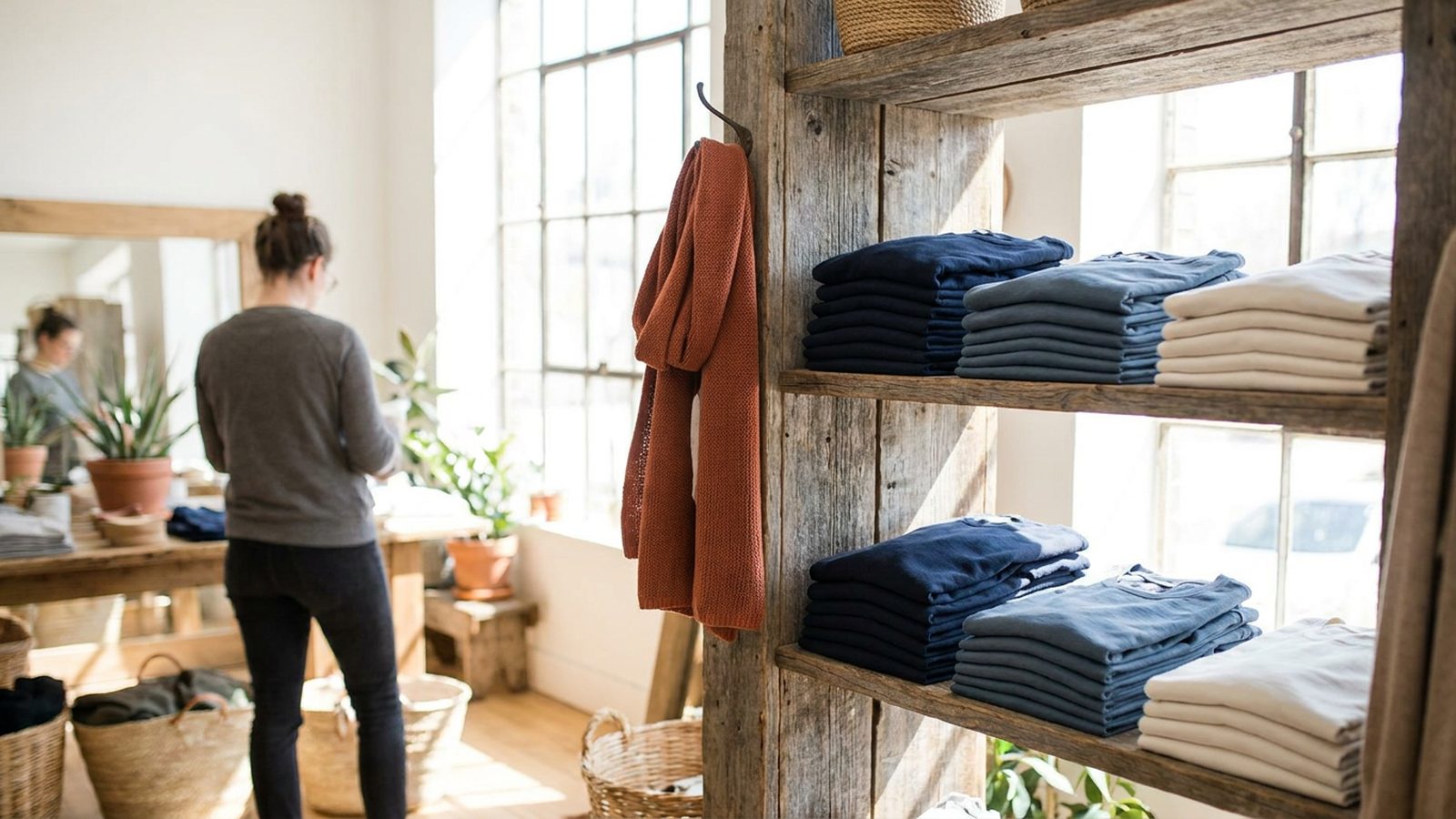
You market ethical fashion without preaching by selling the clothes first and the values quietly: lead with something people actually want, then let the ethics be a reason to feel good rather than a reason to feel told off.
Nobody buys a jumper to be lectured.
Why does so much ethical fashion marketing feel like being told off before you have even bought anything?
You know the tone. The furrowed-brow copy about a burning planet, the guilt served with your gift wrap, the sense that choosing this jumper makes you slightly less awful than the person choosing the other one. It is exhausting. And here is the awkward truth for a sector built on good intentions. Preaching does not sell clothes. It sells a fleeting hit of virtue that fades by the time the customer reaches the checkout, where the cheaper, guilt-free option is waiting with a friendly smile.
The marketing reframe
There is a better way, and it starts with a small reframe. Responsible sourcing is not the moral lecture attached to the product. It is part of what makes the product desirable in the first place.
Consider how the finest brands have always sold. They rarely lead with virtue. They lead with wanting. The weight of the cloth, the hand of the linen, the way a seam sits, the name of the person who wove it. Ethics, done well, belongs in exactly that register. Organic cotton is not just a lower-impact choice, it is softer against the skin and it lasts. A living wage is not only fair, it is the reason the stitching is that good, because someone paid properly and hurried less takes more care. Traceability is not a compliance box, it is a story of hands and places that makes the thing in your basket feel rarer and more considered.
That is the shift. Stop selling the absence of harm. Start selling the presence of quality, character, and care.
Having spent years around cotton supply chains and the people who work them, I can tell you the good stories are already there, sitting unused. Somewhere in your chain is a farmer, a cooperative, a dyer, a maker whose craft is genuinely part of why your product is worth the price. Most brands bury this under a wall of certifications and impact per centages. The certifications matter, but they are the evidence, not the seduction. Lead with the human. Prove it with the logo.
Practical marketing steps
A few practical moves we come back to again and again.
Make the customer the hero, not the villain. Nobody wants to be scolded into a purchase. They want to feel like the kind of discerning person who notices the difference. Write copy that flatters their taste rather than indicting their past choices.
Be specific, because specificity is the opposite of preaching. “Sustainable” is a sermon. “Grown by a cooperative of 400 farmers in Gujarat, spun within 50 miles, and cut to last a decade” is a story. One asks for belief. The other offers proof and lets the customer draw their own admiring conclusion.
Let the ethics be quietly confident, not anxious. Desperation reads on the page. A brand that trusts its own quality does not need to shout about how much better it is than the competition. It simply shows you something lovely and tells you the truth about how it was made.
And resist the urge to fit the whole moral universe into one product description. You are selling a shirt, not delivering a manifesto. The manifesto can live on your about page for the people who go looking. The shirt should just be beautiful, and honest, and worth having.
The winning approach
The brands winning here are not the loudest about their values. They are the ones who have made doing the right thing feel like the more delightful choice, not the more dutiful one. Because most people do want to shop better. They simply do not want to be nagged into it, and who could blame them.
So take the lecture out of your next campaign. Put the wanting back in. Sell the jumper because it is gorgeous and made with care, and let the ethics be the reason it is gorgeous rather than the price of admission. If you would like a second pair of eyes on where your story is hiding, that is rather our favourite kind of work.
Related: Consultancy Cottage is where we help brands shape sustainability and communications strategy.
Similar articles


Need words like these?
Let us write for you
Blogs, newsletters, brand copy and more, from a Highland collective that keeps it human.