
Cultures & Wisdom · Big Ideas · Pioneers
How to Tell a Community's Story Without Speaking Over It
Published 25 July 2026 · By Jen Marsden
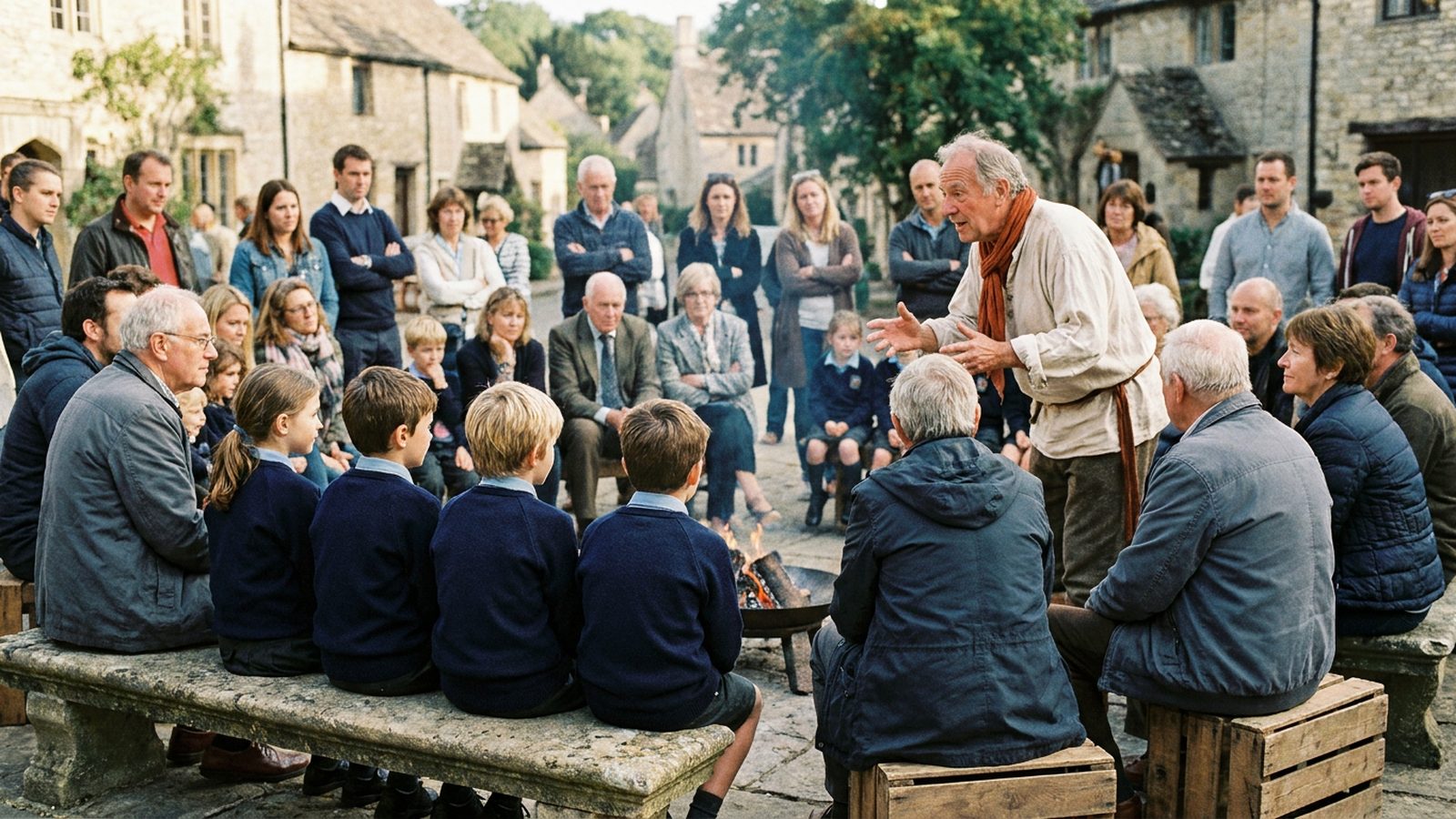
You tell a community’s story without speaking over it by making them the hero and yourself only the narrator: let people speak in their own words, check that they recognise themselves in the result, and keep your own voice out of the spotlight.
If the storyteller ends up looking like the visionary, the story has gone wrong.
When you tell someone else’s story, who ends up being the hero? It is a sharper question than it sounds, because so much well-meaning storytelling quietly answers the narrator. The community becomes the setting, the cause, the moving backdrop, and the person telling the tale becomes the one with vision and voice. Giving voice to the voiceless is a phrase I care about deeply, and it only means anything if we resist the pull to speak over the very people we mean to amplify.
The first thing to notice is that voiceless is nearly always the wrong word. Communities are not silent. They have voices, often powerful ones, telling their own stories in their own ways. What they frequently lack is not voice but access, a platform, a translation, a channel that reaches the people who hold resources and decisions. So the job is rarely to give someone a voice they do not have. It is to help an existing voice be heard where it currently is not. That distinction changes everything about how you approach the work.
Change who does the talking
It changes, first, who does the talking. The instinct of a certain kind of storytelling is to narrate on behalf of, to summarise a community’s experience in the storyteller’s own polished words. But every time you paraphrase where you could have quoted, you take a little of the story into your own mouth. Letting people speak directly, at length, in their own phrasing, is not just more authentic. It is a small transfer of authorship back to where it belongs.
It changes, too, how you handle the parts you do not understand. There will always be aspects of a community’s life that do not fit neatly into the story you find easy to tell. The temptation is to smooth them out, to simplify, to keep only what a distant audience will readily follow. But that smoothing is a form of speaking over. It edits people into a shape that suits the narrator. Respectful storytelling leaves room for what it does not fully grasp, and is honest about the limits of an outsider’s view rather than papering over them.
Secure meaningful consent
Consent runs underneath all of this, and it is more than a signed form. Real consent means people understand how their story will be used, who will see it, and what it is being asked to do. It means they can say no to a detail without losing the whole. It means, ideally, that they see the piece before it goes out and have the standing to say that is not quite right. A story told with consent feels different from one told about people, because the people can feel the difference too.
There is a question of who benefits that is worth sitting with honestly. Whose profile rises when this story is told? Whose funding, whose reputation, whose career? If the answer is only the teller and the organisation behind them, something has gone wrong, however sympathetic the framing. Storytelling that genuinely serves a community keeps asking what flows back to them, in recognition, in resources, in control over how they are represented next time.
The storyteller’s vital role
None of this means the storyteller vanishes. There is real skill in shaping a story so it reaches and moves an audience, and pretending otherwise helps nobody. The point is not to erase your craft but to point it in the right direction. Use your skill to make room, to carry a voice further than it could travel alone, to frame without distorting. Think of yourself less as the author and more as the bridge, and the whole posture shifts.
I hold onto a simple test. Would the community recognise themselves in this, and would they feel it was theirs? Not flattered, not tidied, not turned into a lesson for others, but accurately and fully themselves, told in a way they would be proud to claim. If the answer is yes, the story is probably doing its job. If the answer is that they might find it a little unrecognisable, however beautiful, then the narrator has crept into the centre again.
A simple test to apply
So the gentle nudge is this. The next time you set out to tell a community’s story, keep asking who the hero is, and keep making sure the answer is them. Quote more than you paraphrase. Leave room for what you do not understand. Hand back authorship wherever you can. Giving voice is not about lending yours. It is about getting out of the way of theirs.



Need words like these?
Let us write for you
Blogs, newsletters, brand copy and more, from a Highland collective that keeps it human.