Cultures & Wisdom · Big Ideas · Pioneers
Craft and Continuity: Writing About Artisans With Care
Published 29 July 2026 · By Jen Marsden
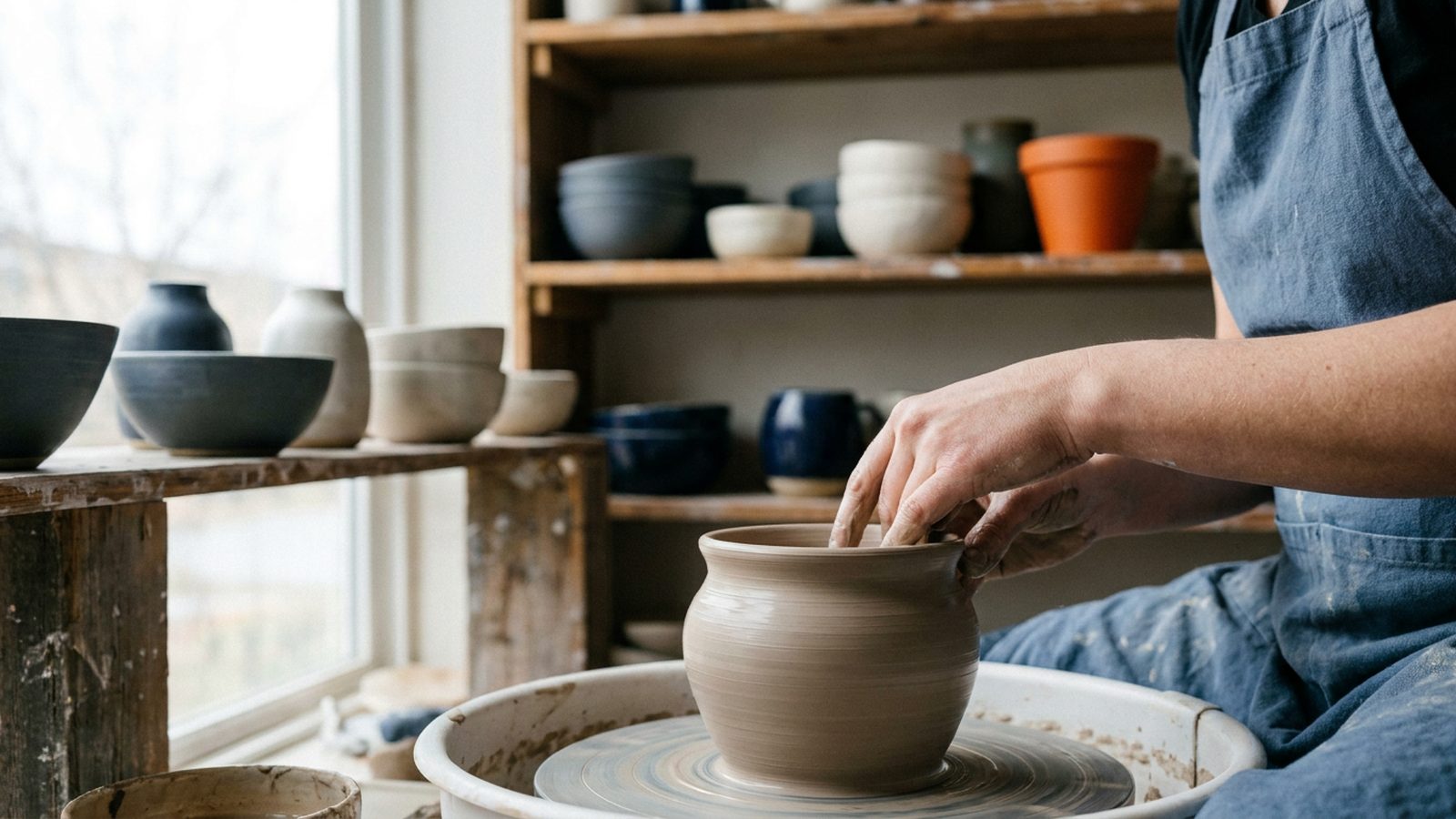
To write about artisans with care, put the maker before the object.
Name the hands, the years of practice, and the choices behind the thing, so the reader meets a person and not just a finished product.
When you admire something beautifully made, how often do you think about the hands that made it? We are trained, as consumers, to see the product and skip the person. The scarf, the pot, the carved panel arrives in front of us finished and anonymous, and the story we are told, if we are told one at all, is about the object. Yet behind every genuinely handmade thing stands a maker, usually with a lineage, and writing about craft with care means honouring them, not just the thing they made.
The easy version of craft writing is essentially advertising. It fixates on the object, its texture, its authenticity, the pleasing idea of handmade, and treats the artisan as a kind of guarantee of quality, a stamp that makes the product more desirable. The maker appears, if at all, as a pair of weathered hands in a photograph, picturesque and nameless. This does something quietly diminishing. It turns a skilled person into a feature of the merchandise, a selling point rather than a subject.
Focus on the person, not just the product
Writing with care starts by putting the maker back at the centre. That means the specifics. Not an artisan, but a named person, with a name spelled correctly and used. Not traditional techniques passed down through generations, that worn phrase, but this particular technique, learned from this particular teacher, practised for this many years, changed in these small ways by this maker’s own hand. Craft is not generic. Every tradition is really a chain of specific individuals, each of whom added something. Naming them is the beginning of respect.
Continuity is the theme the shallow version always misses. A craft is not a static heritage item preserved in amber. It is a living line, handed from one person to the next, and each holder both inherits and adapts. When you write about an artisan, you are writing about a moment in a long relay, someone who received something and will pass it on, perhaps altered. That framing dignifies the maker as a link in something larger than a single transaction, and it is far truer to how craft actually lives than the frozen-tradition cliche.
Be honest about the challenges
It also means being honest about difficulty, because honesty is a form of respect too. Craft is often precarious. Makers frequently struggle to earn a fair living, to compete with cheaper machine production, to persuade younger family members that the skill is worth inheriting. Writing that shows only the romance, the serene artisan at their timeless work, does the maker a disservice by hiding the real conditions of their life. You can honour beauty and acknowledge struggle in the same breath. Indeed you have to, if the portrait is going to be true.
There is a particular trap when the craft belongs to a culture not your own, which is to reach for wonder and mystery, to make the making seem magical rather than skilled. This flatters the writer’s sense of appreciation while quietly stripping the maker of expertise. A better instinct is to treat craft as craft, which is to say as difficult, learned, intelligent work. Ask about the decisions. Ask what is hard, what goes wrong, what took years to master. Expertise treated as expertise is far more respectful than skill treated as enchantment.
Let makers speak for themselves wherever you can, and about more than technique. Ask what the work means to them, what they hope for it, what they fear losing, what they are proud of. A maker’s own words about their craft carry a weight no external description can match, and they shift the piece from a portrait painted over someone to a portrait shaped with them. The aim is for the artisan to read it and feel seen, not merely used to sell.
Avoid tidy preservation narratives
And resist the urge to make every craft story a tidy tale of preservation, the noble tradition saved from extinction. Some makers want to preserve, some want to innovate, some want their children to do something else entirely, and all of those are legitimate. Let the maker define the meaning of their own work rather than fitting them into the narrative that most flatters the reader.
So here is the gentle nudge. Next time you write about something made by hand, or simply hold something made by hand, look past the object to the person and the line they stand in. Learn their name. Ask about the work as work. Tell the truth about what it costs. Craft, at its heart, is people, and the surest way to honour the thing is to honour the maker who brought it into being.
Need words like these?
Let us write for you
Blogs, newsletters, brand copy and more, from a Highland collective that keeps it human.