
Cultures & Wisdom · Big Ideas · Pioneers
Brand Storytelling That Connects: We All Want the Same Things
Published 5 August 2026 · By Jen Marsden
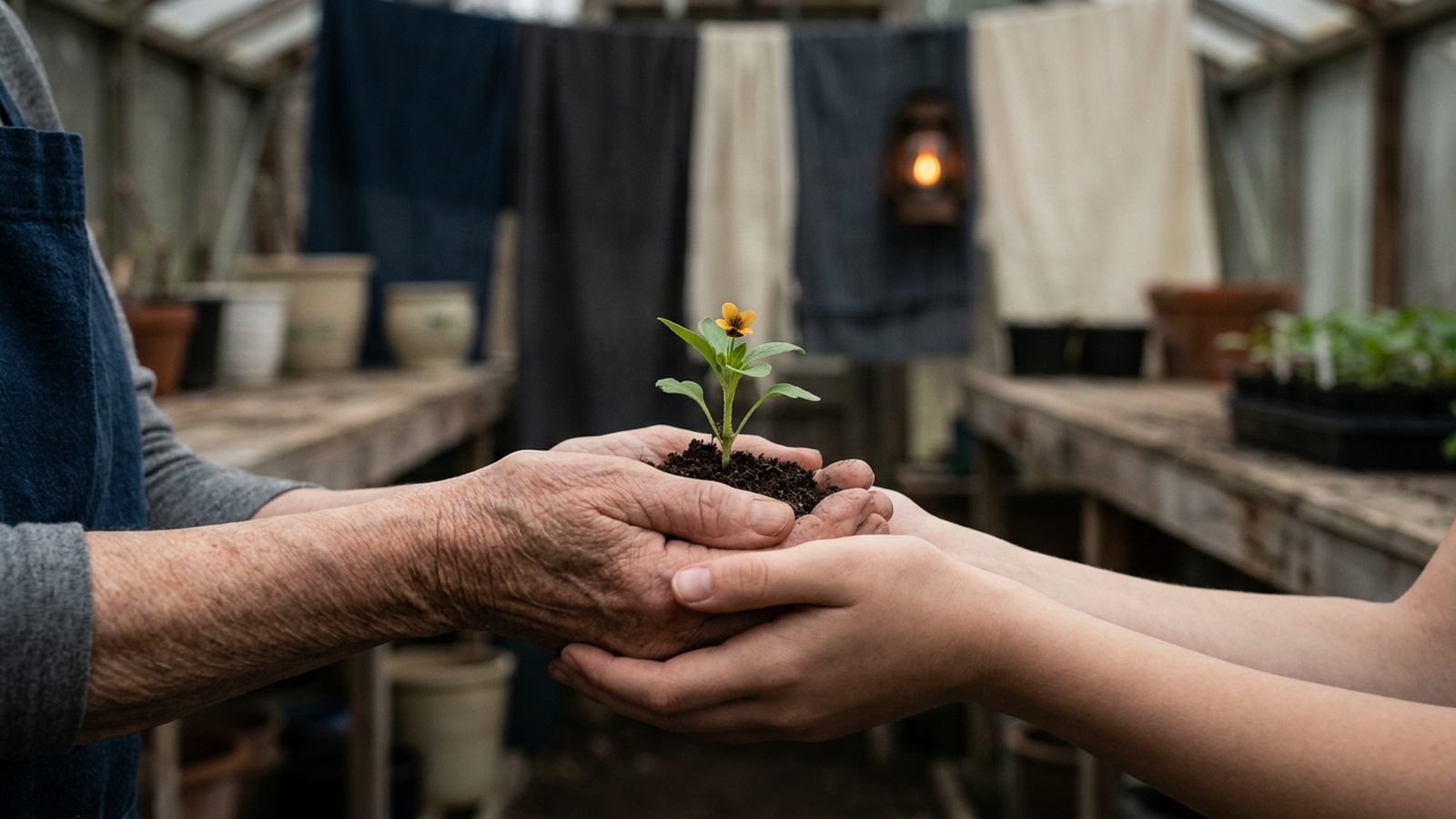
Storytelling connects across any divide because underneath the differences of language, place and belief, people want the same basic things.
Speak to those shared wants honestly and almost anyone will recognise themselves in the story.
Strip away everything that separates us, all the differences of language, place, custom, and belief, and what is left? In my experience, and I have lived and worked across cultures long enough to have tested this, what is left is remarkably consistent. People want to be safe. People want to love and be loved. People want to belong. Almost every story worth telling, from anywhere on earth, turns out to be a variation on those three things.
This is not a claim that we are all the same, which would be both untrue and a little insulting. The differences between cultures are real, deep, and worth honouring in their full specificity. But underneath the genuine variety of how we live sits a smaller set of things we are all, in our different ways, reaching for. Safety. Love. Belonging. The forms change enormously. The longing does not. And that shared longing is the through-line that lets a story travel from one life to a very different one and still land.
Stories bridge cultural gaps
I find this endlessly useful in the work of communication, because it solves a puzzle that otherwise seems impossible. How can a story rooted in one specific culture move someone who shares none of that culture’s references? The answer is that you do not connect people through their differences. You connect them through the human thing underneath, told with all its specific texture intact. A reader who has never seen the place you are describing, never eaten the food, never spoken the language, can still recognise a parent worrying over a child, a person longing for home, a community holding one another through a hard season. That recognition is the bridge.
The mistake would be to conclude that we should therefore strip stories down to their universal core and drop the specifics, telling only the generic tale of love or belonging. That gets it exactly backwards. Generic stories connect with no one, because no one actually lives a generic life. We live specific lives, in specific places, with specific detail, and it is precisely through that specificity that the universal becomes visible. The reader does not recognise belonging in the abstract. They recognise it in this particular family, on this particular evening, and the recognition is stronger for how concrete it is.
So the craft is a kind of double vision. You hold the specific and the universal at the same time. You render the particular life in faithful, respectful detail, resisting every urge to flatten it into a stereotype or tidy it into a lesson. And you trust that the human thing underneath, the safety, the love, the belonging, will carry that specific life across to a reader in a very different one. You do not have to explain the connection. If the detail is true and the longing is real, the reader makes the bridge themselves.
A moral approach to connection
This is also, quietly, a moral stance as much as a technique. When you tell stories on the assumption that we generally want the same things, you approach people you do not know with a kind of default respect. You come looking for the shared humanity rather than the exotic difference. You resist the framing that turns other people into curiosities and instead treat them as fellow travellers wanting, essentially, what you want. That posture changes what you notice and how you write, and readers feel the difference even when they could not name it.
It is worth saying that finding the common thread does not mean pretending conflict and hardship away. Sometimes what people share is precisely a struggle, a fear, a loss. Belonging matters most to those who have felt its absence. Safety means most to those who have known danger. The through-line is not always warm and gentle. It is simply human, in the full range of what that includes, and it connects for exactly that reason.
Find the common thread
So here is the gentle nudge to close on. Whenever you set out to tell a story across any kind of divide, look for the thing underneath that you and your reader and your subject all share. Tell the specific life in all its true and respectful detail, and trust the shared longing to carry it across. We are separated by a great deal, and those separations deserve respect. But we generally want the same things, and a story that reaches for that common ground, without erasing what makes each life its own, can connect almost anyone to almost anyone. That, in the end, is what storytelling is for.

Need words like these?
Let us write for you
Blogs, newsletters, brand copy and more, from a Highland collective that keeps it human.