
Travel & Place · Slow Life · Nature & Wildlife
Destination Content: A Lesson From the Roman Amphitheatre Nobody Visits
Published 28 December 2025 · By Jen Marsden
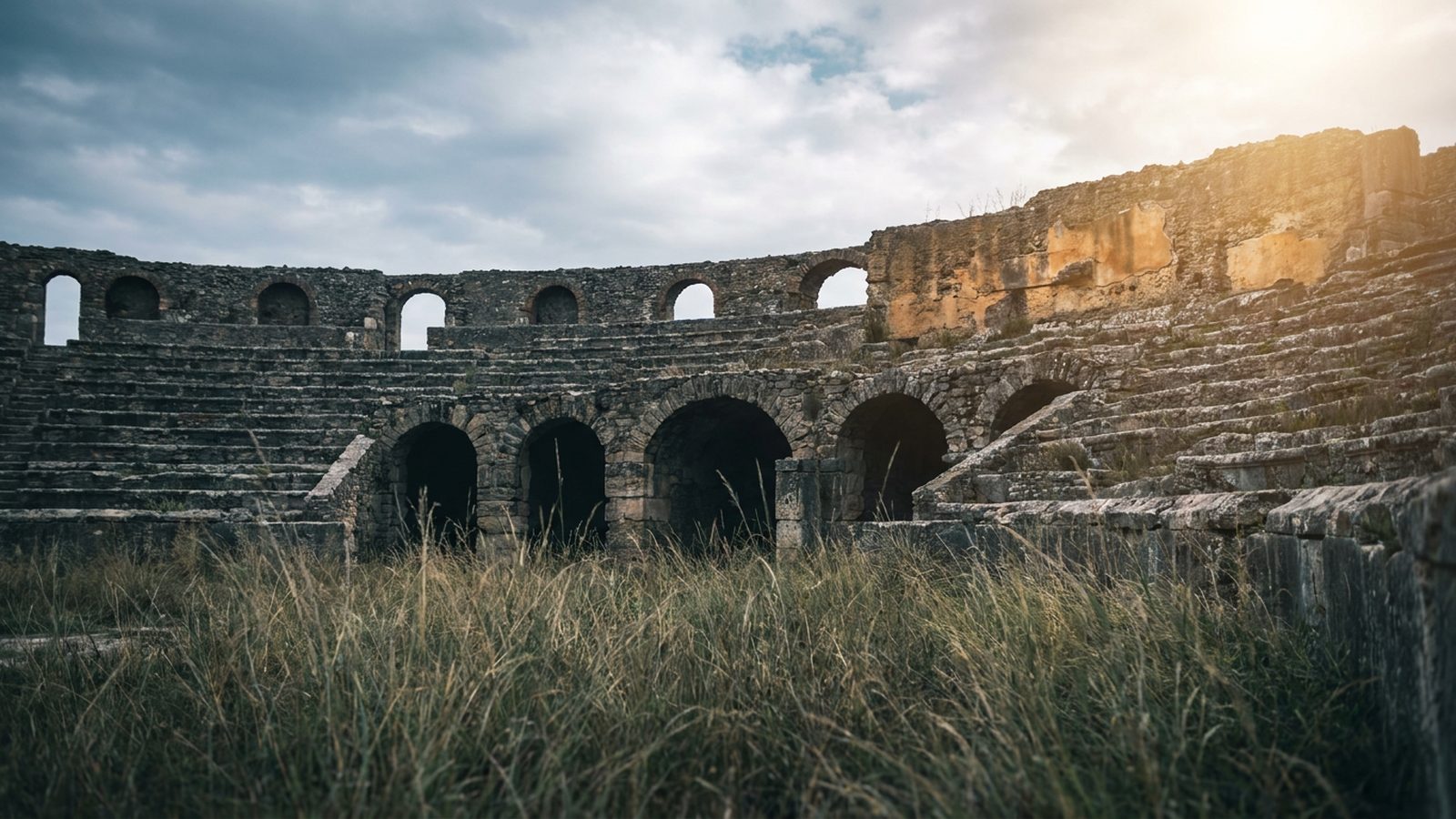
Somewhere in Europe there is a Roman amphitheatre where you can stand alone at midday and hear nothing but the wind.
No queue, no barrier, no gift shop, no crowd holding phones aloft. Just old stone and the strange privilege of having two thousand years of history entirely to yourself. Meanwhile, a few hours away, another amphitheatre you could name in your sleep is buckling under the weight of the people who came to admire it.
Same civilisation. Same period. Wildly different fates. The difference is not the ruins. It is the stories we chose to tell about them, and that is the whole lesson for anyone making destination content.
Overtourism is a choice
We talk a lot now about overtourism, usually as if it were a weather event, something that simply happens to popular places. It is not. It is made, by decades of content all pointing at the same handful of sights, funnelling millions of people down the same few streets to photograph the same few stones. Every guidebook, every list, every algorithm agreeing on where you must go. The famous places did not become overwhelmed by accident. We wrote them that way.
Which means we can write differently. And the tool for the job is smaller and quieter than you might expect. The micro-story.
What is a micro-story
A micro-story is a small, specific, true tale about an overlooked place. Not a comprehensive guide, not a hard sell, just a vivid fragment that lodges in the mind. The empty amphitheatre where a shepherd still grazes his flock among the arches. The mosaic in a village nobody stops at, turned up by a farmer’s plough and guarded ever since by his granddaughter. These stories do something a top ten list never can. They make a forgotten place feel worth choosing.
Here is why the small approach works where the big one fails.
Why this approach works
Specificity creates desire that fame cannot. When everyone already knows a place, seeing it is just confirmation. You stood where a thousand photos were taken before yours. The half-hidden amphitheatre offers something rarer: the feeling of discovery, of having found something for yourself. Content that hands a reader that feeling is far more persuasive than another reminder of what they already know they should see.
Redirection protects what we love. Every reader you gently steer towards the quiet ruin is one fewer body pressing against the famous one. Do this at scale, across enough stories, and you begin to spread the load. The celebrated sight gets to breathe. The overlooked one gets the visitors and the income it has long deserved. Nobody is deprived. The map simply gets wider.
The forgotten places are usually better anyway. This part feels almost too convenient to be true, and yet it holds. The quiet site gives you space, silence, and a relationship with the past that no crowd allows. You are not managing an experience, you are having one. Honest content can say this plainly, because it is plainly so.
Communities off the beaten track need the custom more. The famous town is drowning in visitors and often wishes for fewer. The village three valleys over would genuinely welcome them, and the money would matter there in a way it no longer does where the coaches already stop. Redirecting demand is not just crowd control. It is a small act of fairness.
A new ambition for marketers
For destination marketers, this asks for a change of ambition. The instinct is always to attach yourself to the icon, to ride the recognition of the name everyone knows. But there is more value, and more good, in becoming the trusted voice that reveals what others miss. Be the one who found the empty amphitheatre. Be the reason someone had the best afternoon of their trip somewhere they had never heard of that morning.
None of this means abandoning the great sights. They are great for a reason, and people will always want to see them. It means refusing to point at them and only them. It means using every small story you tell to widen the frame, so the weight of the world’s curiosity falls a little more evenly.
The empty amphitheatre is not a problem to be solved. It is an invitation, and a quiet reminder of the power we hold. We decide where the crowds go by deciding which stories to tell. So tell a smaller one. Point somewhere new. The old stones, famous and forgotten alike, will thank you for it.



Need words like these?
Let us write for you
Blogs, newsletters, brand copy and more, from a Highland collective that keeps it human.