
Highlands Life · Scotland · Slow Life
The Rural Business Case: Supporting the Local Economy
Published 26 June 2026 · By Jen Marsden
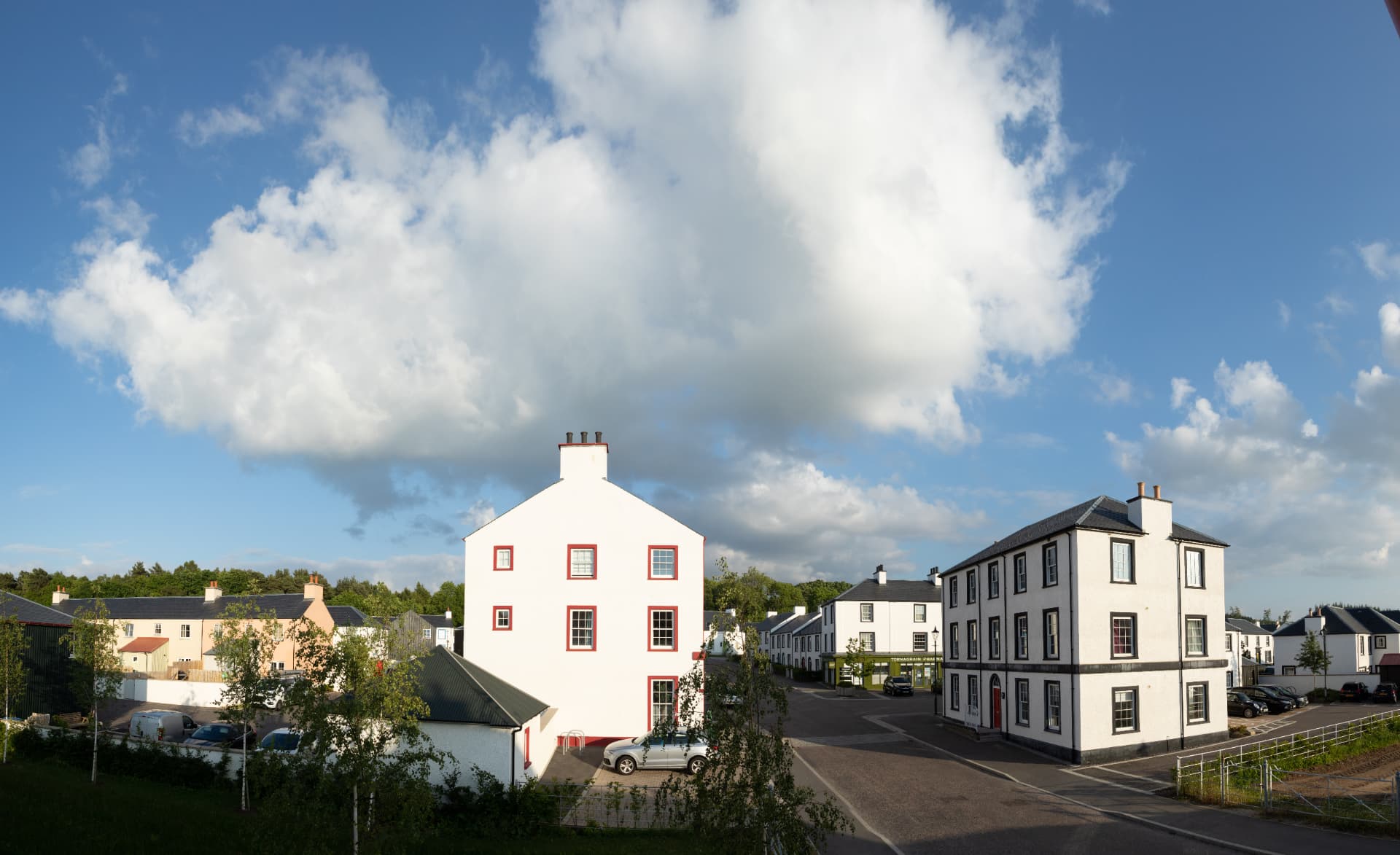
Money spent with a local business does not stop at the till.
It goes round again, paying wages, filling other tills, and keeping the shops, suppliers and services of a rural place alive.
Where does your money actually go after you spend it?
It is a strange question, because most of us never think past the point of purchase. The money leaves the account, the thing arrives, the transaction closes in our minds. But money does not stop moving when it leaves your hands. It carries on, into someone else’s hands and then someone else’s after that, and where it goes next turns out to matter enormously, especially if you live somewhere rural, where the difference between money that stays and money that leaves is the difference between a place that thrives and a place that slowly hollows out.
The local ripple effect
I think about this a lot, running a business up here. Not out of grim duty, but because I can see the ripples with my own eyes in a way you simply cannot in a big city, where the economy is too vast and tangled to trace. In a smaller place the connections are visible. When I hire a local freelancer, I know some of what I pay them will go to the local shop, and the shop owner will spend some of it locally in turn, and so it circulates, each pound doing several rounds of useful work before it eventually drifts away. Economists have a slightly clinical name for this, the local multiplier, but you do not need the jargon to feel the truth of it in a Highland community.
The opposite is just as visible, and considerably more sobering. When money is spent with a distant supplier, a faceless platform, a company whose profits vanish to a head office hundreds of miles away, it does one lap and it is gone. The convenience is real. The price might even be lower. But the pound has left the community after a single transaction, and it does not come back. Multiply that across a whole region’s worth of default choices and you have the quiet mechanism by which rural places are drained, not dramatically, not all at once, but steadily, one perfectly reasonable individual decision at a time.
It’s not about guilt
I am not here to lecture anyone into guilt, and I want to be careful about that, because the shame-based version of this argument helps no one. Nobody can source every last thing locally, and pretending otherwise is both impractical and a bit self-righteous. Some things genuinely are not available nearby, or not at a price a small business can bear, and that is simply reality, not moral failure. The point is not perfection. The point is intention, the habit of asking, before you spend, whether there is a local option you have simply overlooked out of convenience.
Because convenience is usually what does the damage, not malice. It is easier to default to the big distant supplier, the one-click option, the familiar national name. The local alternative often takes a phone call, a little more effort, a moment of thought. But that moment of thought is precisely where the ripple starts. Choosing the nearby printer, the regional maker, the local freelancer over the anonymous platform is not charity, and I would resist anyone framing it that way. It is a decision about what kind of place you want to live in, made with the most honest instrument you have, which is your actual spending.
The local business case
There is a business case here too, not just a sentimental one, and it runs in both directions. The stronger the local economy, the more customers, collaborators, and skilled people there are for everyone in it, including you. A rural business that helps hollow out its own community is, in the long run, sawing through the branch it sits on. The freelancers I support today are part of the ecosystem I will need to draw on tomorrow. Keeping money circulating locally is not against my interest. Over any timescale that matters, it is my interest.
So next time you are about to spend, on anything, pause for that moment and ask where the money will go after it leaves you. Not every time, not to the point of paralysis, but often enough to make it a habit. Is there someone nearby who could do this. Would the pound do a few useful laps close to home before it drifts away. You do not have to get it right every time. You just have to remember that spending is never neutral, and that where you spend sends ripples outward long after you have forgotten the purchase. In a rural place, those ripples are the economy.
Need words like these?
Let us write for you
Blogs, newsletters, brand copy and more, from a Highland collective that keeps it human.