
Slow Food & Agriculture · Food & Farming · Slow Life
The Slow Food Movement: Why Taking Time Over Food Matters
Published 2 February 2026 · By Jen Marsden
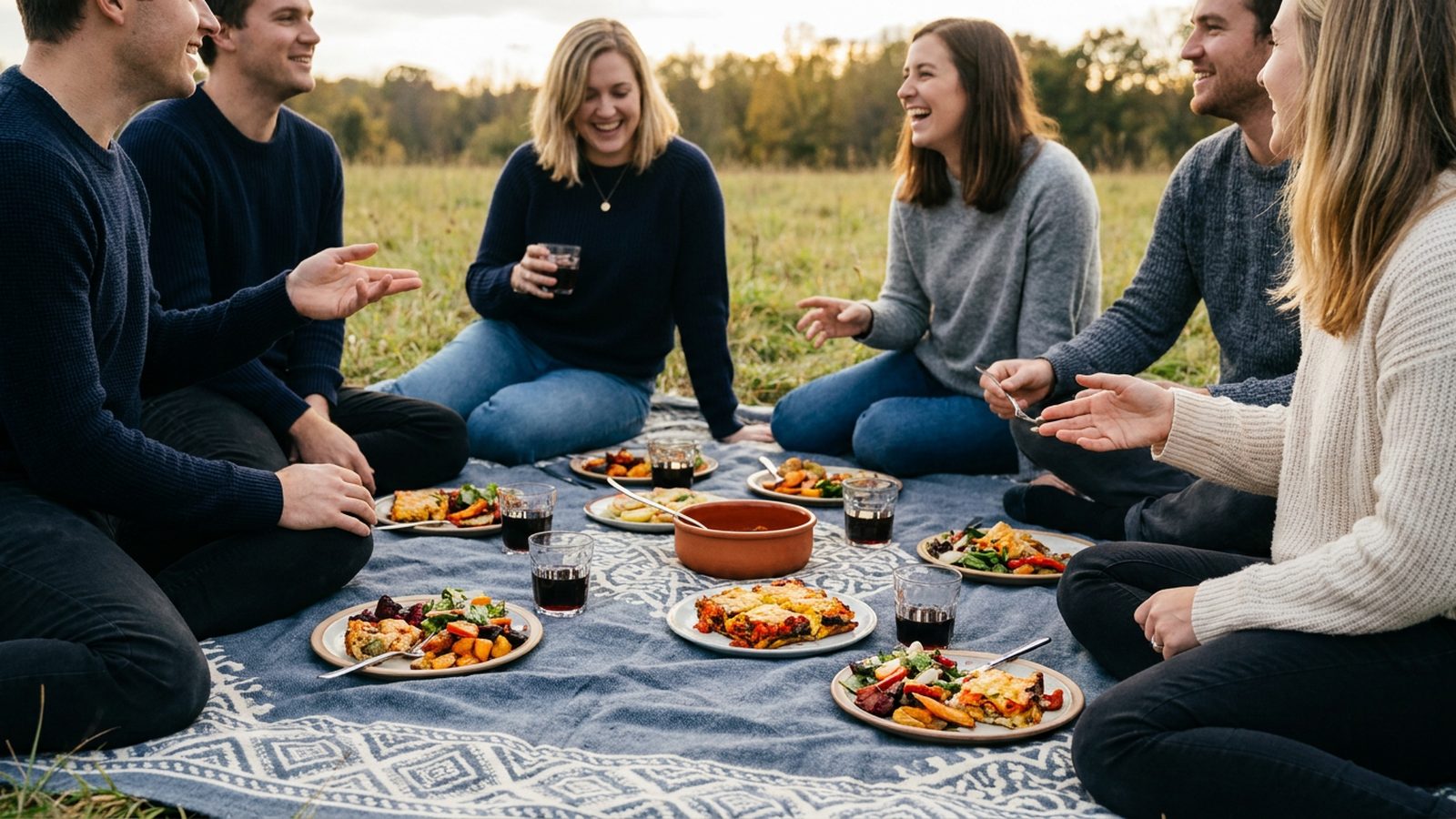
Taking time over food matters because eating slowly is how you actually taste it, notice when you are full, and turn a quick refuel into something that feeds more than your stomach.
Rush every meal and you miss most of what food is for.
When was the last time you ate something slowly, with no screen in sight, and actually noticed the taste of it? For a lot of us, the honest answer is a while ago. We eat at our desks, in the car, on the way to somewhere else. Food has quietly become fuel, something to get through rather than something to enjoy.
The Slow Food movement started as a gentle rebellion against exactly that. In 1986, a group in Italy protested the opening of a fast food restaurant near the Spanish Steps in Rome. Their point was not that fast food was evil. It was that a whole culture of eating, of growing, of gathering around a table, was being flattened into something quick, cheap, and forgettable. Slow Food asked a simple question. What if we treated food as a pleasure and a shared inheritance rather than a transaction?
Decades on, the movement has grown into a global network, but the heart of it is still refreshingly uncomplicated. Good, clean, and fair. Good meaning food that tastes of something and is produced with care. Clean meaning it does not wreck the soil, the water, or the climate along the way. Fair meaning the people who grow and make it are paid properly for their work. It is hard to argue with any of that.
More than a lifestyle choice
Here is the part that surprises people. Slowing down over food is not just a nice lifestyle choice. It is quietly one of the more sustainable things you can do. When you take time over food, you tend to buy differently. You are more likely to choose the tomato that was grown down the road than the one flown in from the other side of the planet. You are more likely to cook from scratch, which means less packaging and less waste. You are more likely to use up the vegetables lurking at the back of the fridge, because you have actually planned a meal rather than grabbing whatever is fastest.
Pleasure and sustainability, it turns out, are not opposites. They are travelling in the same direction. The industrial food system runs on speed and cheapness, and speed and cheapness are exactly what has driven so much environmental damage. Fields stripped of variety, animals raised in miserable conditions, mountains of food thrown away because it was never really valued in the first place. Slowing down interrupts that logic. It puts value back where it belongs.
The cultural connection to food
There is a cultural piece too, and it matters more than we sometimes admit. Every region, every family, has food that carries memory. The recipe your grandmother made, the dish that means a particular festival, the loaf that only tastes right when it is made a certain way. When food becomes purely functional, those stories start to disappear. Slow Food has spent years cataloguing endangered foods and traditions through its Ark of Taste project, precisely because once a variety or a skill is lost, it is gone for good. Protecting flavour is also protecting culture.
None of this requires you to become a purist or to spend every evening making pasta by hand. That is the lovely thing about it. Slowing down is not about perfection. It is about noticing. You might start with one meal a week that you cook properly and eat without rushing. You might buy from a market once a fortnight and chat to the person who grew the food. You might simply sit down at a table rather than standing at the counter. Small shifts, repeated, add up.
Stories, not just ingredients
For those of us who spend our days helping food and drink brands tell their stories, the Slow Food movement is a useful reminder. People do not fall in love with sustainability statistics. They fall in love with taste, memory, and belonging. If you make food that is grown with care, the most powerful thing you can do is help people slow down enough to notice the difference. That is where loyalty comes from.
So this week, pick one meal. Turn off the notifications, put something good on a plate, and give it your full attention. You might find that taking your time is not a luxury at all. It is the point.
Need words like these?
Let us write for you
Blogs, newsletters, brand copy and more, from a Highland collective that keeps it human.