
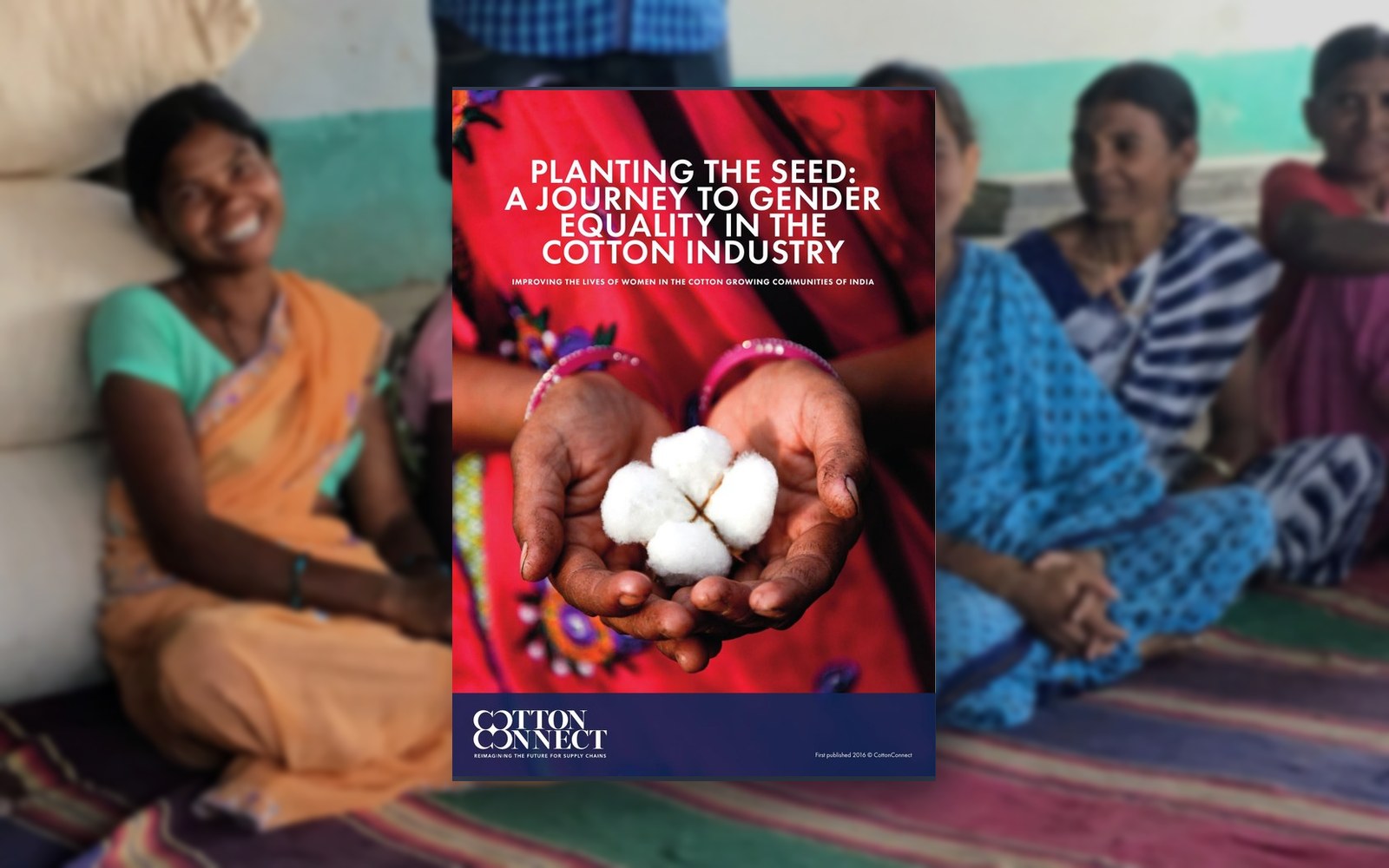
CottonConnect
Women in Cotton: turning field research into hard evidence
the full story
A report that let cotton farmers speak for themselves, backed by numbers no one could argue with.
Headline results
- Yield for trained farmers
- +11.5%Yield for trained farmers
- Chemical pesticide use
- -52%Chemical pesticide use
- Farmer profit
- +176%Farmer profit
The brief
CottonConnect transforms cotton supply chains by training smallholder farmers. The work was real, the results were real, and almost nobody outside the industry knew about it. They needed to raise their profile and, crucially, to evidence the impact of their gender and sustainability programmes in India.
The risk with a report like this is obvious. It becomes a slab of statistics that nobody finishes, or a soft-focus story with no proof behind it. We wanted both: the numbers and the people.
What we did
Jen wrote the report and travelled to India to gather the raw material herself, interviewing and photographing farmers on their own land rather than working from second-hand notes. That meant sitting with women who had gone through the training, asking what actually changed at home, and listening to the answers that did not fit the neat narrative.
Back at the desk, we built the structure around a simple logic: here is what life looked like before, here is what the programme changed, here is what the data says. Each farmer case study sits beside the figures it belongs to, so the evidence and the human story carry each other.
The result
A persuasive, human, data-led report built on the REEL programme's own figures: yields up 11.5%, chemical pesticide use down 52%, and farmer profit up 176%. Those numbers went on to do a lot of heavy lifting in press, on the website, and in conversations with brands.
No greenwashing, no vague claims about empowerment. Just the work, the women doing it, and the receipts.
Your project, next
Got impact data and no story around it?
If you have results buried in a spreadsheet, we can turn them into something people read, quote and act on. Tell us what you have measured.