
Travel & Place · Slow Life · Nature & Wildlife
The Best Travel Writing Tells You How to See, Not Where to Go
Published 29 November 2025 · By Jen Marsden
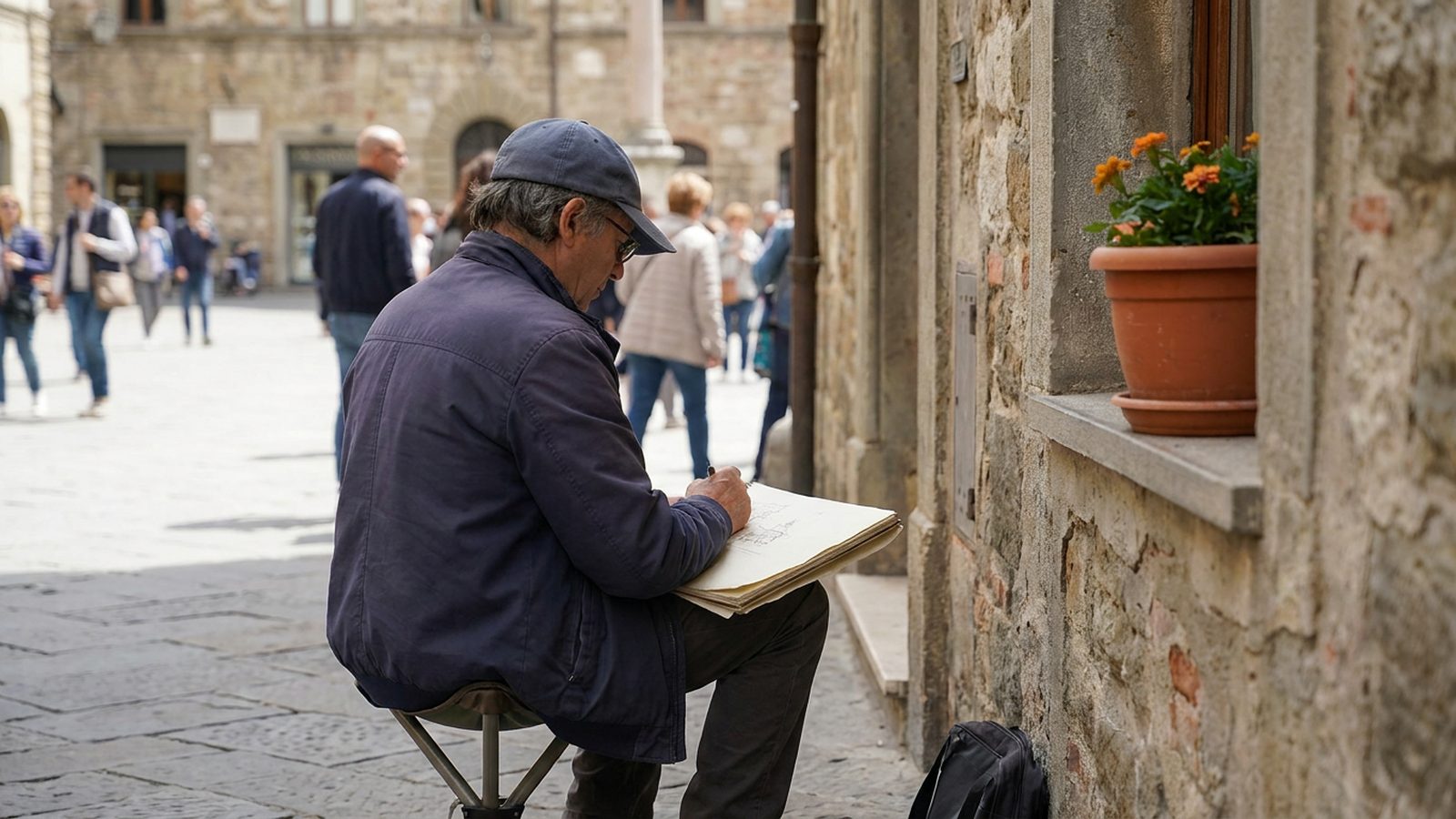
I have a shelf of guidebooks I will probably never open again.
They told me where to go, and for a while that was enough. Then one morning, in a town whose name I have half forgotten, I watched an old man feed stray cats from a paper bag, muttering to each one like an old friend. No guidebook had ever taught me the thing that actually mattered. Not where to point myself, but how to look once I got there.
That is the quiet failure of most travel writing. It is obsessed with destinations. Ten places you must see. The hidden gem everyone is talking about, which by definition is no longer hidden. The listicle marches you from one landmark to the next, ticking boxes, and somewhere in all that ticking the experience of being somewhere gets lost.
The best travel writing does something harder. It teaches you how to see.
I still think about a piece I read years ago about a market in a city I have never visited. The writer barely told me what to buy or where it was. Instead she showed me how the light fell on a pyramid of oranges, the particular rhythm of the vendors’ calls, the small negotiation in a glance between buyer and seller. I have never been to that market and I do not need to. What she gave me was a way of paying attention that I have carried into every market since.
Seeing is better than going
That is the gift. A destination is a place you visit once. A way of seeing is a lens you take everywhere.
Here is the contrarian bit, and I will say it plainly. Destination content, the where-to-go stuff, quietly makes us worse travellers. It trains us to treat a place as a checklist. We arrive already knowing what we are meant to admire, we photograph it from the angle everyone photographs it from, and we move on, having seen everything and noticed nothing. The list becomes a set of instructions for missing the point.
When you know how to see, the opposite happens. You slow down. You stop needing a place to be famous before it is worth your attention. The unremarkable street becomes interesting because you have learned to read it: the shrine tucked into a doorway, the way the neighbourhood shifts as you walk, the small human dramas on every corner. You stop hunting for the extraordinary and start finding it in the ordinary, which is where most of it lives anyway.
How good travel writing works
So what does writing that teaches seeing do differently?
It lingers. It is in no hurry to reach the next attraction, because the attraction was never the point. It sits with a single moment long enough to find what is true in it.
It notices the small stuff. Not the cathedral, but the pigeons on the steps and the woman who has fed them every morning for thirty years. The detail is where the life is.
It admits confusion and wonder. Guidebooks are confident, because their job is to tell you what is what. The best travel writing lets itself be puzzled, moved, and occasionally lost, because that is what being somewhere actually feels like.
It trusts you. It does not hand you conclusions. It shows you how the writer paid attention and quietly invites you to do the same.
Balance practical and profound
I am not saying practical information has no place. Sometimes you genuinely need to know how the bus works. But that is service, not writing, and we should not confuse the two. The writing that stays with you, that changes how you move through the world, is almost never about the where. It is about the how.
So next time you sit down to write about a place, or just to remember one, resist the list. Do not tell me the ten things to see. Show me one thing you saw properly, and how you came to see it. Teach me your attention. That is the souvenir worth keeping, and unlike the fridge magnet, it works everywhere.

Need words like these?
Let us write for you
Blogs, newsletters, brand copy and more, from a Highland collective that keeps it human.