
Slow Food & Agriculture · Food & Farming · Slow Life
The Rise of Community Supported Agriculture
Published 17 February 2026 · By Jen Marsden
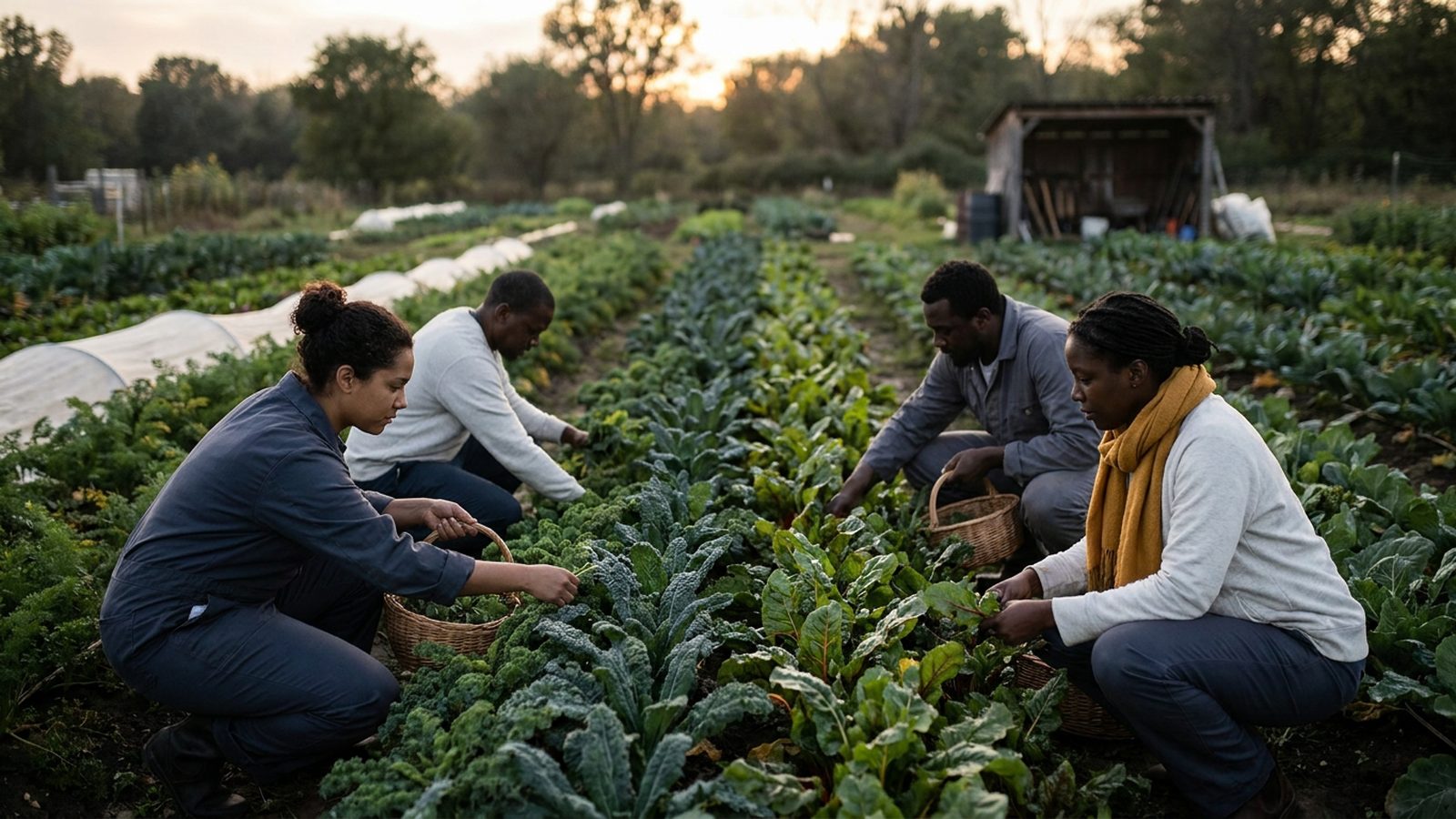
Community supported agriculture is a way of buying food directly from the farm that grows it, usually by paying up front for a share of the harvest.
It cuts out the long chain of processors and retailers, so the grower gets a fair price and you know exactly where your dinner came from.
Do you know the name of the person who grew your dinner? For almost everyone, the answer is no, and that is not really our fault. The modern food system is built to keep growers and eaters as far apart as possible, with a long chain of processors, distributors, and retailers filling the gap between the field and your fork. Community Supported Agriculture, usually shortened to CSA, is a quietly radical attempt to close that gap and let the two ends of the chain actually meet.
The idea is beautifully simple. Instead of a farm growing food, selling it to a wholesaler, and hoping for the best, a group of local people commit to the farm in advance. They buy a share of the season’s harvest, often paying upfront or in regular instalments, and in return they receive a steady supply of whatever the farm produces. A weekly box of vegetables, perhaps, or eggs, fruit, meat, or flowers. The eaters get fresh, local food and a real connection to where it comes from. The farmer gets something precious and rare in farming, which is a guaranteed income and a community that has their back.
Why farmers need support
That last part matters more than it first appears. Farming is a brutally uncertain business. A grower can do everything right and still be wiped out by a bad harvest, a price crash, or a supermarket cancelling an order at the last minute. Under the CSA model, the members share some of that risk. If the carrots fail but the squash thrives, the boxes reflect that, and everyone rides the season together. It sounds like a small thing, but it fundamentally changes the relationship. The farmer is no longer a faceless supplier squeezed on price. They are someone the community knows, trusts, and is invested in.
There is real environmental sense in it too. Because the food travels a short distance and goes straight from grower to eater, there is far less packaging, less transport, and less waste. CSA farms tend to grow a wide diversity of crops rather than a single cash crop, which is better for the soil and for wildlife. And because members are eating whatever is ripe that week, they naturally eat seasonally, reconnecting with the rhythm of the year in a way most of us have lost. Many people who join a CSA say it changed how they cook, simply because they had to learn what to do with a glut of chard or an unfamiliar variety of squash.
The challenges of CSA
It is not without its challenges, and it would be dishonest to pretend otherwise. A veg box arrives on the farm’s terms, not yours, so you might get more kale than you know what to do with and no say in the matter. Paying upfront asks for a bit of trust and a bit of budgeting. And the model does not suit everyone’s life or larder. But for a growing number of households, that trade-off is more than worth it. You give up a little convenience and control, and you gain flavour, freshness, a lighter footprint, and the genuine pleasure of knowing your farmer by name.
The movement has been quietly growing for years, and it is easy to see why it resonates now. People are increasingly uneasy about the distance, both literal and moral, between themselves and their food. They want to know it was grown with care, that the person who grew it was treated fairly, and that their money is doing some good close to home. CSA answers all of that in one go. It is not a niche curiosity so much as a practical, working alternative to a food system that has left a lot of people cold.
How to get involved
If the idea appeals, getting involved is easier than you might think. A quick search will usually turn up a CSA or box scheme within reach, and many are happy for you to visit the farm, meet the team, and see how it all works before you commit. Start with a small share if you are unsure. You may well find, as many members do, that opening the weekly box becomes one of the small pleasures of your week, and that knowing your grower makes every meal taste a little different.
Need words like these?
Let us write for you
Blogs, newsletters, brand copy and more, from a Highland collective that keeps it human.