
Slow Food & Agriculture · Food & Farming · Slow Life
Food Sovereignty, Explained
Published 9 February 2026 · By Jen Marsden
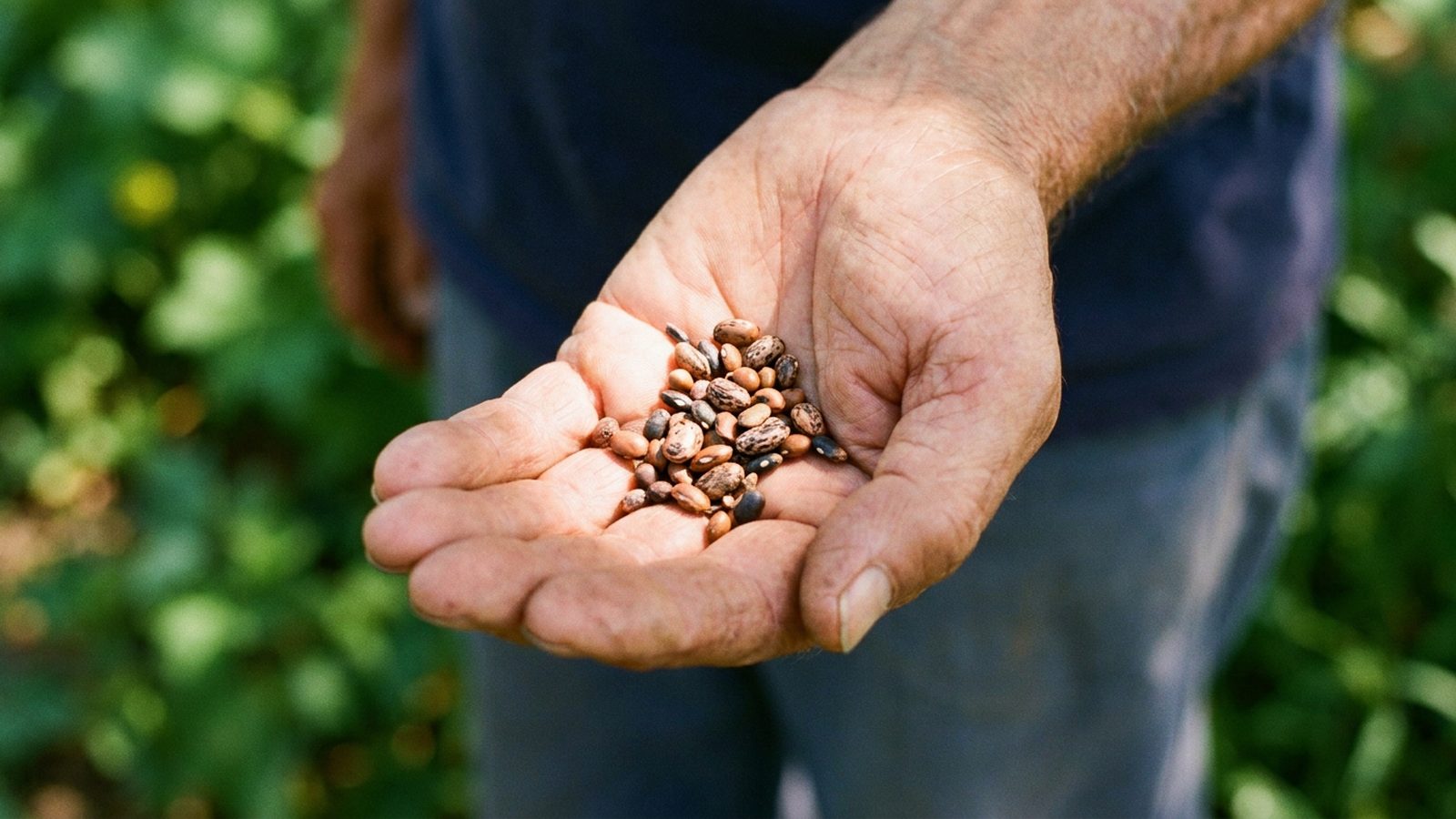
Food sovereignty is the idea that the people who grow and eat food, not distant corporations or markets, should decide how it is produced.
It puts control of seeds, land, and the food system back in local hands.
Who owns the seed? It sounds like an odd question, the sort of thing that only a farmer or a botanist would think about. But it turns out to be one of the most important questions in the whole food system, because whoever controls the seed ends up shaping what we grow, what we eat, and who profits from it. Food sovereignty is the idea that this control should sit with communities and the people who feed them, rather than with a handful of distant corporations.
Let us start with a distinction that trips a lot of people up. Food security and food sovereignty are not the same thing. Food security is about having enough to eat. That matters enormously, but it says nothing about where the food comes from, how it is grown, or who benefits. You could, in theory, have a food secure country that imports almost everything, grows it in ways that wreck the soil, and leaves its own farmers unable to make a living. Food sovereignty goes deeper. It asks not just whether people are fed, but whether they have real say over their own food system.
The term was coined in the 1990s by La Via Campesina, an international movement of peasant farmers, and its central claim is that food is not merely a commodity. It is a right, a culture, and a relationship with the land. From that starting point flow a few clear principles. Communities should be able to decide what they grow and eat. Farmers should have secure access to land, water, and seeds. Local and ecological ways of producing food should be valued over industrial monoculture. And the people who do the actual work of feeding us should be able to earn a decent living doing it.
The importance of seeds
Which brings us back to the seed. For most of human history, farmers saved seeds from one harvest to plant the next, swapping and adapting varieties suited to their own soil and climate. It was a commons, shared and endlessly renewed. Over the past century, that quietly changed. A small number of agrochemical companies now own the rights to a huge proportion of the world’s commercial seed, much of it patented and sold on the condition that it cannot be saved and replanted. Some varieties are even engineered to pair with the company’s own herbicides, tying farmers into buying both. The seed, once free, became a subscription.
This is not an abstract worry. When seed is concentrated in so few hands, biodiversity shrinks, because companies push the varieties that are most profitable to sell rather than the ones best suited to a particular place. Farmers lose independence and take on debt. And the knowledge of how to grow diverse, resilient crops, built up over generations, starts to fade. Control over the seed really does ripple all the way up to the plate.
Food sovereignty’s alternative vision
Food sovereignty offers an alternative that is less about nostalgia and more about resilience. Community seed banks preserve and share local varieties. Farmer-led networks keep traditional knowledge alive. Shorter supply chains mean communities are less exposed when a global market wobbles. A food system with more hands on it, and more diversity in it, tends to bend rather than break when shocks come, and shocks are coming more often.
It is worth saying that food sovereignty is not anti-technology or anti-trade. The point is not to romanticise a mud-hut past. It is about who holds the power to decide. A modern, productive farm can absolutely be part of a sovereign food system, as long as the choices rest with the people and communities involved rather than being dictated from above.
What you can do
So what can any of this mean for the rest of us, standing in a supermarket aisle rather than a field? More than you might think. Buying from growers who use open-pollinated or heritage seeds keeps diversity alive. Supporting local food networks keeps money and decisions closer to home. And simply understanding the question, who owns the seed, changes how you read the labels around you.
The plate at your table is the last link in a very long chain. Food sovereignty asks us to look back up that chain and notice who is really in charge. Once you have seen it, you cannot unsee it, and that awareness is where better choices begin.
Need words like these?
Let us write for you
Blogs, newsletters, brand copy and more, from a Highland collective that keeps it human.